
I was trying process a lot of intersecting events today when I recalled the first car I ever owned, more accurately the first car my parents purchased for me. I remember the drive with my dad to an unfamiliar neighborhood, I kind of remember our exchange as we exited his car, and then I remember us walking back to his car with no second car. I’m piecemealing grainy memory artifacts here but I’m a numbers guy and I remember clearly the $900 asking price and the $675 buying price my dad finally negotiated for my first car – a 1980 Chevy Monza.
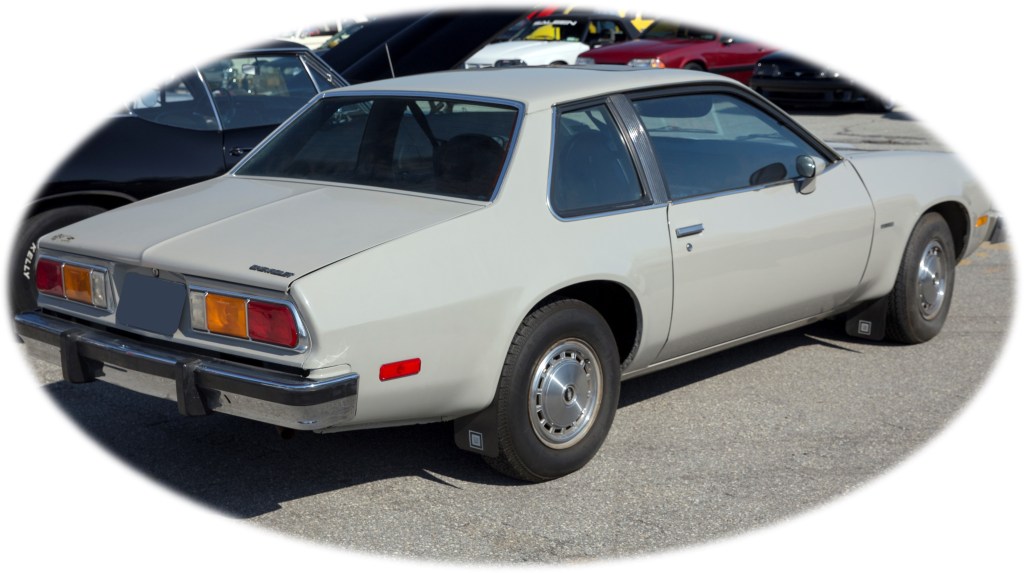
Mine had a luggage rack bolted onto the trunk which made it a “sport” edition. It wasn’t until I wrote this entry that I put together the connection that the Monza competed with the Ford Mustang II – the same car my parents purchased for my older sister years before. Her car was red; mine was primer grey (but I waxed that matte like no other). The interior was burgundy vinyl so imagine the armadillo groom’s cake from Steel Magnolias on wheels! And as I’m starting to learn based on the varied ages of my readers, we may not all have the same shared experiences. Steel Magnolias was a wildly popular movie set in my home state many, many moons ago.
My sophomore year in high school I drove the Monza to Homecoming after picking up my date from a neighborhood close to where I used to golf. She was a year older, and we met in math class – pretty and nice to a fault; she surely had other invites but went with my friend date offer. I remember showing up at her house and her father straightening my collar; I was still shaky nervous because it was a date, albeit a friendly one. I remember her mom fastening the boutonniere on my sports coat and off we went. I was a sophomore out of his league driving a Chevy Monza. I loved that car and would honestly buy it again for the memories. I had buddies driving new cars and I can honestly say I loved my Monza – memory fades but if mine holds true the engine block had a crack in it so I carried 2 liter water bottles around to fill up the radiator when it got hot. Good times!
Last Friday my youngest had his own Homecoming event. Times have changed for sure, but my wife and I attended the football game along with our son which was nice. He hung out with us for a bit and then moved on to the student section. He had some friends in general to meet, one in particular. These days it’s a lot less about a single dance and more about events and activities leading up to the football game. Our local news even featured a neat article on an area school district that set a Guinness record for the largest mum (article). And in the midst of all this I sent my oldest some of my old golf clubs – they may or may not ever get used but I’ll inspect them when I’m onsite regardless. He had been on my mind because I had recently given a presentation to parents of middle school and high school students on the college admissions process.
Old cars, old traditions, old memories. One of my wife’s students knew she would be at the game last Friday and looked for her to no end (his older brother is in the high school band). He came in on Monday and said as much. Even though they didn’t connect with each other, they now both remember something together about that game. I had to baby my Chevy back in the day to keep it going, homecomings are unpredictable, and collectively their reminders live on. While these days there seems to be more noise and drama in our work space, it’s still pretty cool to be so directly connected to generations experiencing these memory makers.
 What if? Why Not?