
We’re in week 4 of CovidU and still working through many bumps both anticipated and never dreamed up. We’ve had some big time high five worthy successes along with some cringe worthy sideline slipups. We’re learning as we go and hopefully learning to grow.
We’re finding out as kids return how much of an impact this whole pandemic has really done – it’s dented the toughest armor. Social isolation indeed subjects some to more adversity than others – this past Saturday my oldest dressed in his Sunday’s best and attended his first goodbye gathering for a peer. His niche group now sports armbands in remembrance. Questions of how could we have been better and more supportive go unanswered as we revisit prevention. Don’t ever wager on a second guess.
In addition to the kids, we have staff we concern ourselves with. In some instances, the worry isn’t even the first line of contact – I would assume this is commonplace in other industry but I can only vouch for K-12. I have 2 staff members as I write this post high up on my “send safe thoughts” list. Let’s try to remember who we need to succeed – I’m generally not warm fuzzy but I’m smart enough to know if the folks we rely on are “elsewhere” then we need to better support their needs. When it comes to school, my family mirrors many of my close colleagues – my wife and I work for this school district and my kids both benefit from its teachers. The stakes are pretty high for school success in my household.
As I penned this entry, it reminded me of a story I followed over the summer. The short version follows a journalist with a Ph.D in psychology who engages a legendary poker pro to teach her the game. At the time the card newbie was experiencing the full game of life which probably contributed to her “all in” approach. By her own assessment, “poker depends on the nuanced reading of human intention, interactions, and deceptions.” You can click the screen grab below for an excerpt write-up which also links to the book which details the entire experience.
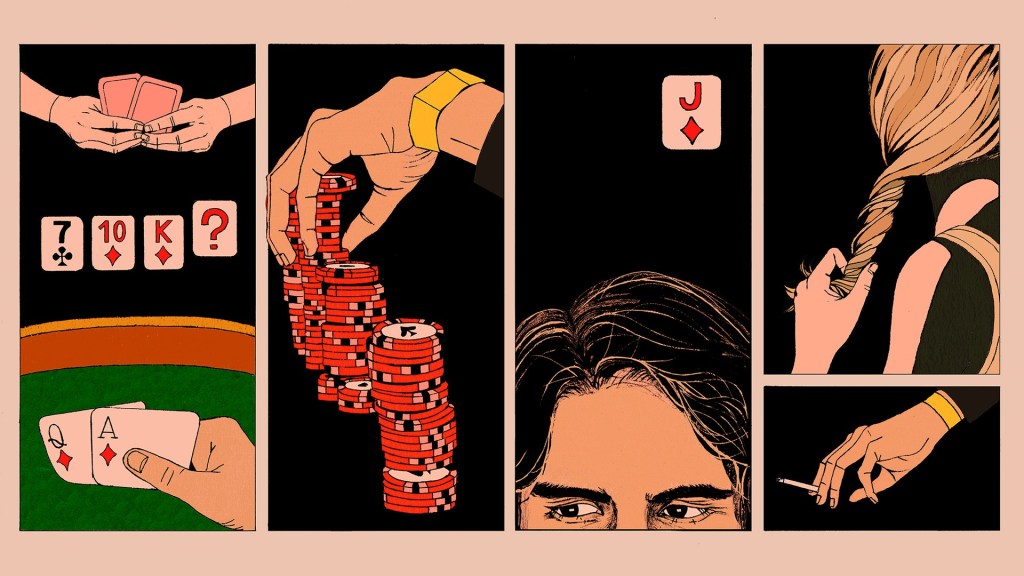
One of the world’s best players taught me his unique psychological style of play—and it worked.
So when do you wager? When do you play the odds and focus on some and not others? Never – you never make kid learning a bet, or a gamble. You never entertain the notion that premiums can be placed on learning. I know there’s plenty of recycled rhetoric to fill the second-guessing. My challenge to all that read this post is you never gamble on a child’s future. And to borrow from Erik Seidel, the famous poker player profiled in The Biggest Bluff, “Less certainty. More inquiry.”

 What if? Why Not?