Being A Pandemic Student

I’m writing more these recent days, maybe more inspiration I suppose (I hope?).  I’m fighting more these days too, maybe more coronavirus I suppose.  I’m a science guy by nature with an above average appreciation for the arts so I will just say keep being smart folks.

I want to share with you an idea that just seems so needed and timely.  A famed photographer with all the chops of any made a major pivot in honor of his own child and all of her classmates.  As I understand the read, Matt Mendelsohn is a very special someone, and he decided to take portraits of all and equally special classmates of his senior daughter on his dime.  Under normal times you would hold your breath for more than the lap of a pool to see if he would take on your special occasion.

On the off chance questions of “yeah right” puddle up, let me redirect.  As the story goes, this father aches like many, many others and had a natural atonement.  And he has a gift like none other; people generally pay him handsome sums for his artistic uniqueness.  Regardless, he put on his imposter educator/humanizer cap and did some things.  School folks are feeling it because they are real folks – one of my son’s 8th grade teachers just this morning sent a note to the class to cry over.  She’s a warm demander and her kids aim to please and while she didn’t give them the green light to slack off she paved a mile of empty highway to her doorstep should anyone need to reach out (for anything).  And I’m not talking about the passive “call if you need something” but rather “we’re family and if I have to hunt you down get ready.”

So back to Mr. Matt – he decided to go pro bono and mobile – with curbside service no less.  I’m not sure what moved him to action other than a fatherly heart but he decided to stage senior (12th graders) portraits in their own driveways (so they had one).  You can read the article here and check out the pics here.

I personally was consumed by the stories as they were told through the article.  The intent was not to photoshop the circumstance but present it as visual testimony.  Not a reminder either but simply an acknowledgement, a mild second-hand empathetic gesture.  It’s 8:30 am as I write this entry and my first of two has just woken up (only to get his phone and go back to bed) – things are different.  And it reminded me of why I shared with my staff just this past Friday this clip by Rita Pierson – I did so not as some spare gesture but as someone who had personally benefited from her mentorship.

And despite everything and without taking away anything we have a decision to make.  By my estimates, Mr. Matt and Ms. Rita are special people but they are not that rare – walk the mile to my son’s English teacher and while she’s not common, she’s got company.  And I’m certain her door will be unlocked…

What Is Your Character Arc?

The other evening my wife and I were talking with our younger son about a book he had just received.  He’s an aspiring author and had purchased an instructional guide on how to improve his craft.  The website alone says it all – Helping Writers Become Authors dot com.

Creating Character Arcs

This how-to reference lays out in comprehensive fashion the critical elements of writing a story others will want to read, with an emphasis on the do’s and don’ts (which ironically comes with its own controversy – dos and don’ts?).  What I learned from my son via this book is that there are three general types of character development, that is, the human curve that occurs over the course of any novel.  They are the positive change arc, the flat arc, and the negative change arc.  The positive change arc is by far the most popular yet complicated to develop and introduces readers to an essential figure within the story that changes for the better.  The other two arcs are fairly self-explanatory.

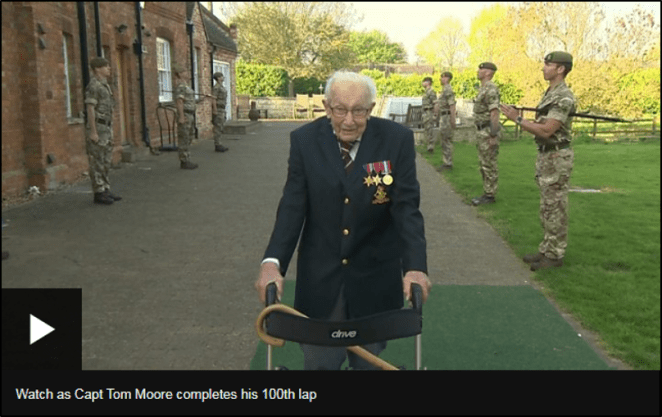
We learned on Friday that schools in Texas will remain closed for the rest of this school year.  Over the weekend I spent time reading about the positive changers that are emerging during the pandemic.  Here locally the owners of a Mexican restaurant that had to transition to a delivery and to-go model also had to significantly scale back their workforce.  When they approached their landlords about rent relief, a story was in the making (How One Mexican Restaurant Is Feeding Workers at Two Dallas Hospitals)!  Elsewhere, a thirteen-year-old wunderkind answered the call when he learned about the bruising that was occurring to health care workers who have been forced to wear medical masks for such extended periods.  The seventh-grade Boy Scout DIYer found a design on the internet to create ear guards using his own 3-D printer.  One proud post later by his mom and Quinn Callander became known to over half a million people.  He has now donated more than 500 straps to people near and far.  And across the pond, a 99-year-old WWII veteran raised $33 million for Britain’s health-care system by walking his garden.  He set up a fundraising page and decided to walk the 82-foot length of his garden back and forth 100 times, using his walker for support.  Capt. Tom Moore turns 100 on April 30th and wanted to raise 1,000 pounds (the equivalent to $1,250) to thank medical staff who helped him with treatment for cancer and a broken hip.  He would walk 10 laps at a time and posted frequently to social media over the six days it took him to complete his adventure.  The response by his followers was overwhelming and his JustGiving campaign is the largest total ever raised and the fastest growing on the platform.

Tom Moore

There’s a quote making its rounds on the internet and says:

“2020 is a unique Leap Year.  It has 29 days in February, 300 days in March, and 5 years in April.”

Funny but not funny, right?  Earlier this month our three high school principals came together (virtually) and hashed out a gesture worthy of an NBC story.  They knew all kids were having an emotional time after leaving for spring break recess back on March 6th only later to learn through emergency closures that it would effectively conclude this school year.  They were especially concerned about their seniors and had simple yard signs delivered to some 2,000 graduates-to-be.  On it the message was anything but simple – “We Love Our Seniors.”  We all have an opportunity to allow this moment in time to change the trajectory of our character and it potentially can go one of three ways…

First Responders

Today’s question – how do you not write about COVID-19 during COVID-19?  The answer – you don’t.  This pandemic doesn’t have a date like 9/11 and hopefully won’t ultimately have a year either.  What started with 2 people in King County (Washington) back in February has now tipped north of 22K as I write this post.  I’m in the school business and so are many reading my entries; for most, learning and life go on.

A colleague whose daughter lives in an apartment outside NYC has now maxed out on her Instacart deliveries and needs to probably lease the adjoining space for her daughter so she can store all of the goods sent by M.O.M.  Curfews tend to be more fluid, early starts are all relative, and Easter came and went without a shower (I’m not talking about the weather 😊).  Tennis team meetings still happen, viola lessons keep going, doctor’s visits happen – VIRTUALLY anything can happen.  Even a televet visit for our dog who blew out her knee stayed on schedule.

Error
This video doesn’t exist

So back to the subject of the question at hand – COVID-19.  I was a little late to this article which was first published last week by ProPublica, a nonprofit news group located in the epicenter.  But I’m glad I came across it and I would encourage you twice to read it.  What unfolds is an informal diary of Simon Ressner, a FDNY battalion chief based in central Brooklyn, as he recounts his latest 24-hour shift, a tour of duty that began at 9 a.m. on Friday, April 3.  Here is an excerpt:

“I am working as chief in Battalion 57 of the FDNY, located in Bedford-Stuyvesant, Brooklyn. Bed-Stuy is a historically African-American neighborhood that saw its population grow during the time when huge numbers of Southern blacks migrated north, leaving agriculture work for ostensibly better jobs. In the last few years, it has undergone major gentrification, but it still remains culturally and demographically an African-American neighborhood with a history of both hard times and cultural richness. Since almost all the country’s past traumas have always hit the poor neighborhoods worst, I wonder what this worst situation, COVID-19, is going to entail and for how long.  I was a fireman here 25 years ago and now have returned as chief towards the end of my career. I thought that surviving Sept. 11, 2001, would be the part of history I would tell grandchildren, but COVID has clearly surmounted even that disastrous and heartbreaking day. The department lost 343; at least 50 of them were people I knew, including my chief, Dennis Cross. He taught me how to fight fires, but also how to sail a boat, and after his death his widow gave me use of his 25-foot Catalina.”

Later in his journaling Ressner describes the roughness of Bedford-Stuyvesant as a location but that “firefighters want to be where the action is, not because they are unfeeling or reckless but because we know that you can’t be good at this without actually doing it.”  I’d like to think the same sentiments could be said about teachers.  They’ve shouldered a load that for now is not a part of my son’s favorite class but certainly will be discussed in World History in the generations that follow.  And as they have risen to every occasion, I’d like to remember they bear a burden we seldom may see.  Because for as much as a teacher does at school, they have now invited their students into their homes.  And with that a completely new dynamic is emerging, one that is taking down more walls and revealing more emotion.  They are first responders…