
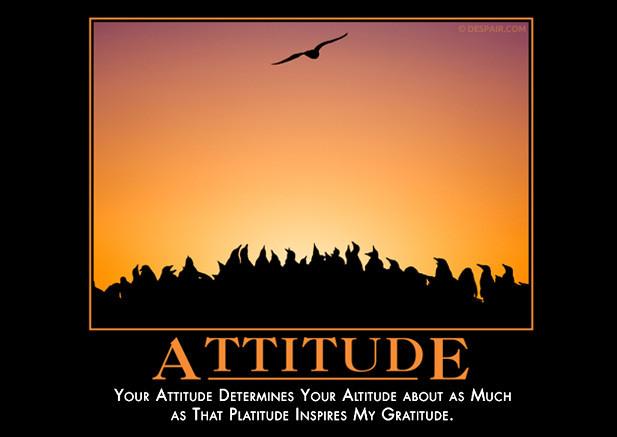
One of my go-to sites when needing a reality check is despair dot com. It’s an online novelty shop that pokes fun at the retail motivational spin industry that sells hope in convenient office displays. A signature product is their take on the inspirational posters we often see with a buzz word followed by a tag line. I was remembering a favorite “demotivator” of mine earlier this week when listening to my son share his thoughts and reactions to a political advertisement he had seen on TV.
I had read a quote while following coverage on the serial mail bomber by our commander in chief that claimed “a very big part of the anger we see today in our society is caused by the purposely false and inaccurate reporting of the mainstream media that I refer to as Fake News.” It stuck with me too long and lingered and when my son commented that he disliked the tone of the commercials he was seeing and did not understand the reason [his words] “why all they do is talk bad about each other,” I realized he was 12 and I’m not and I’m wondering the same thing. So I did a little research as I’m prone to do.
One of the organizations I’m affiliated with is the International Society for Technology in Education (ISTE) and, among other things, ISTE has developed a framework for school folks on how to rethink education and create innovative learning environments. A major component of this road map addresses digital citizenship which attempts to promote safe, smart, and ethical decisions online. Sam Wineburg, a Stanford University professor and lead author of a recent study that explored students and their ability to evaluate online information, gets right to the point. “Many people assume that because young people are fluent in social media they are equally perceptive about what they find there. Our work shows the opposite to be true.” Consider this for a moment – a key finding from the Wineburg study – 82% of students can’t distinguish between sponsored and unsponsored content. This was a 12-state, nearly 8,000 kid study, surveying middle school, high school, and college level students!
So when I hear calls about the true enemy of the people, I realize rhetoric is indeed rhetorical. And if my kids and your kids and collectively our students are struggling with fact and fiction, maybe we can all benefit from reading a bit more from Dr. Wineburg’s research. What can we do better to engage students in legitimate debate on topics of interest that honors and respects differences in their discourse? As moderators, how do we tailor our own bias and not just meet kids half way, but go more than that proverbial mile? Though the picture above was pun full intended, engaging each other’s cooperation is a universal survival skill we can never get too right.

 What if? Why Not?