
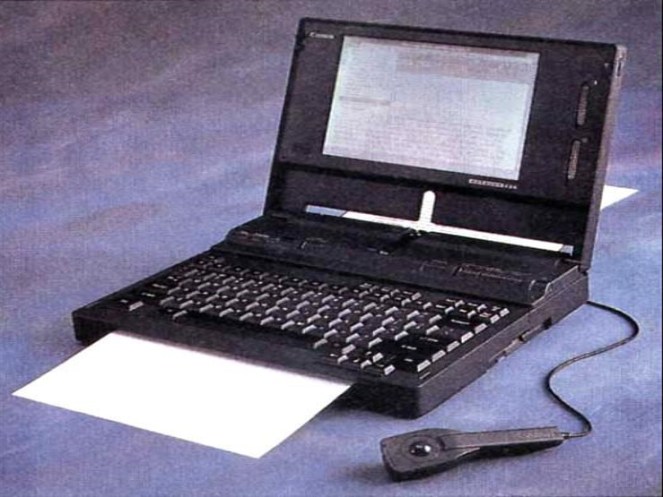
Last week I had the opportunity to attend an event with our director of instructional technology and chief information officer on digital transitions. The symposium was intended to unpack the EdTech landscape and lay out strategies for sustainability. What it became was a polished bait-and-switch marketing front for vendors (ahem I mean solution providers) to distribute sliced bread. By the time we reached the “alien incursion data literacy game,” we decided it was time to go! On our way back from the event we reminisced about this age of technology we are in and when each of us entered it. For me, the Canon NoteJet 486 was the MacGyver of all advancements (the Swiss Army knife of cool). I mean really – it was everything perfect.
Later that afternoon in the office I did a quick internet search to basically remind myself of how hip I really was back then for having the NoteJet and found this write-up in PCMag, arguably an authority on such matters:
“7 Bizarre FrankenPCs That Are Better Off Dead”
Cannon’s strange-looking NoteJet 486 stands out in the annals of weird notebook history due to its integrated BubbleJet printer (Canon’s trade name for its inkjet printers) that printed three pages per minute. This 7.7-pound computer also sported a 9.5-inch monochrome VGA display and a 486 CPU for around $2,500. (And if you were so inclined, you could also buy that neat trackball remote thingy.)
So I decided I was done with artificial intelligence (AI) at that point and needed to employ more self-help strategies to cope with the realization that my glory days may have yet to come! And then I went two for two when reading about the “dark side of emotional intelligence” in this article by The Atlantic. Many of you are familiar with the term emotional intelligence which has gained mainstream popularity and originates back to efforts to formulate an emotional quotient (EQ). To oversimply, EQ sought to balance and temper IQ, the idea being that it’s maybe just as important to be able to read the room as it is to read in the room. I was reminded of this social construct earlier this week in conversations about smart kids who do not so smart things. As we become more and more dependent on various technology, perhaps now more than ever the skills required to build relationships become most important. When did text etiquette replace the rest of etiquette? And as shepherds for young people, do our values and beliefs align with what we expect from them? These are their formative years and as such maybe it’s the setbacks that generate the best solutions. And maybe part of our role then is to be “space providers” while they wrestle with their multiple intelligences.

 What if? Why Not?
Tony Robbins says, “It’s not about resources. It’s about resourcefulness.” Finding the balance versus jumping into anything that plugs in simply because it plugs in. Access to information doesn’t always equate to reliable information. It’s a balancing act for which adults are not always prepared. Being resourceful instead of leveraging ALL of the resources is the first step.
LikeLike